


Zen Idle: Gravity Meditation
4.24.39K Reviews
App Specs
- Version
- 2.1.11
- Updated On
- License
- Free
- Downloads
- 1,000,000+
- Developer
- Tech Tree Games
- Categories
- Simulation
- Platform
- Android
Screenshots
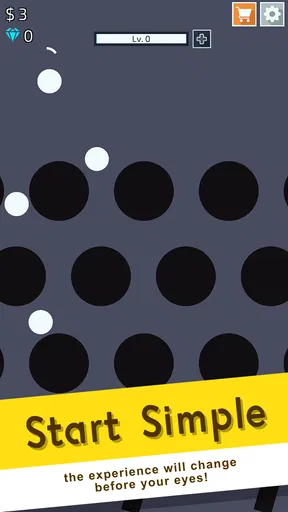
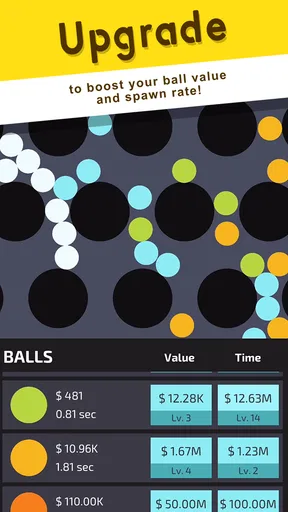

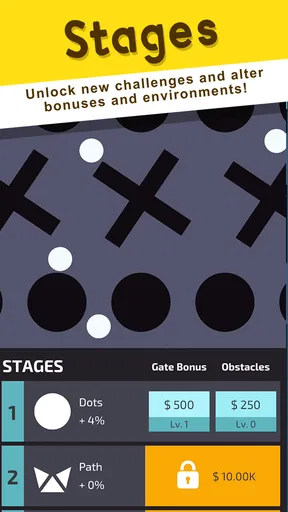
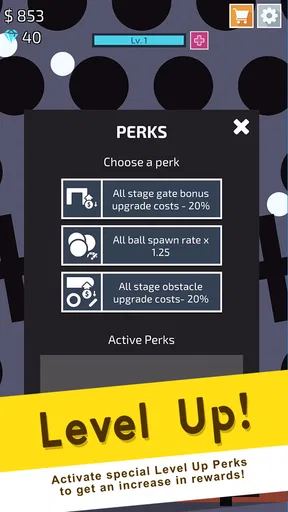
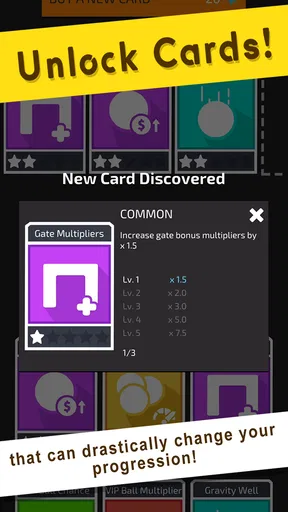
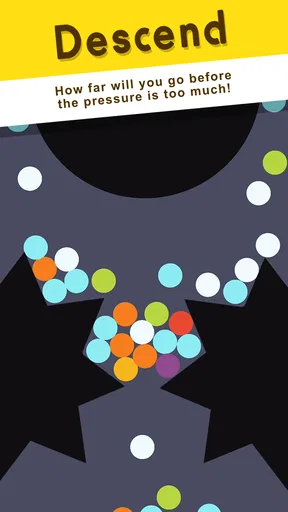
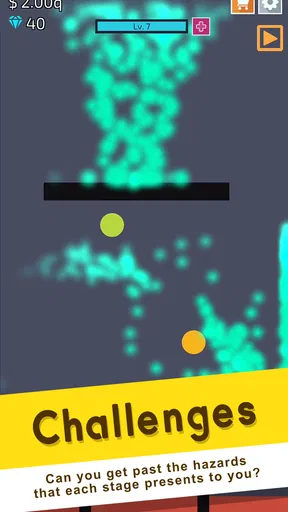
 Analysis by AppCompare
Zen Idle: Gravity Meditation is the kind of simulation game I open when I want something happening on screen without having to give it my full attention. Balls roll, drop, and bounce through a clean visual space, and the pleasure comes from watching the movement gradually turn into progress. It is simple on purpose, but that simplicity has a particular appeal: I can check in for a short moment, make a few decisions, and leave it running in the background of my attention.
My first impression was that this is less about winning a dramatic challenge and more about creating a small, repeatable ritual. The presentation is uncluttered, the central motion is easy to understand, and the game does not ask me to learn a complicated fictional setting before I can enjoy it. Tech Tree Games has built the experience around visual flow, so the balls themselves become the focus rather than characters, dialogue, or a large map.
That makes it a good fit for players who enjoy idle simulation games but want something calmer than a management title filled with menus and urgent tasks. It is free to start, rated for Everyone, and available for devices running Android 7.0 or newer. The game has reached over a million installs, with a 4.2 average from around forty-four thousand ratings, so it has clearly found an audience beyond the most dedicated idle-game fans.
A quiet world built from motion, space, and repetition
I find the game’s identity clearest when I treat its moving balls as more than background animation: they make each small change easy to observe. In this section, I look at how that restrained visual approach shapes the experience and why it can feel soothing without offering much variety. That distinction matters when deciding whether its quiet pace suits you.
The visual language is the main setting
There is no conventional world to explore here. Instead, the setting is communicated through gravity, curves, drops, and the gradual accumulation of movement. I found that surprisingly effective. The game does not need a story-heavy backdrop to establish a mood because the physical behavior of the balls gives the screen its identity. Every change in direction, every descent, and every collision contributes to the feeling that the system is alive even when I am not actively touching it.
The art direction works because it stays focused. In many simulation games, visual decoration competes with the information I need to make decisions. Here, the moving objects are both the entertainment and the feedback. I can see the effect of progress rather than reading about it in a long explanation. That makes the game approachable when I am tired or only half paying attention.
I also like how the lack of traditional characters changes the relationship between player and game. I am not managing a person with a personality or directing a team with individual needs. I am tuning a miniature physical process. That gives the experience a meditative quality, but it also means players looking for emotional storytelling, exploration, or a strong sense of place may find the presentation too abstract.
Worth Reading Before You Choose

EA SPORTS FC Mobile 26 Is a Bigger Football Game, but It Takes Time

Flipboard Shows What News Apps Must Do Beyond the Feed

Switching to Android Auto Means Rethinking Your Driving Routine

Google Calendar Makes a Crowded Week Easier to Manage

Ludo King Makes the Most of the Minutes Between Plans

Baby Panda World Brings Quick Play to Modern Phones, but Its Game Library Feels Busy
Why the minimalist presentation matters
The restrained look is not merely a cosmetic choice. It protects the core loop from becoming noisy. When the screen is built around falling and bouncing movement, visual clarity matters more than elaborate decoration. I can quickly tell whether the current arrangement feels productive, whether a change has made the flow more satisfying, and whether I want to keep watching or move on.
One useful habit is to treat the screen as a small experiment rather than as a conventional level. Instead of tapping through every available option immediately, I prefer making one change, watching the result, and then deciding whether the new pattern is actually better for my session. This turns passive viewing into light observation. I am still playing, but I am also learning how the motion feels under different choices.
That approach is especially useful during short breaks. If I have only a few minutes, I do not need to remember a complicated objective. I can look at the current flow, collect what is ready, make a modest adjustment, and close the game. When I return later, the visual state gives me an immediate reminder of what I was doing.
Where the atmosphere can become repetitive
The same focused design can eventually expose the game’s main limitation. Because the visual language is deliberately narrow, long sessions can feel similar. The movement remains pleasant, but the novelty comes more from progression and optimization than from new scenery or dramatic events. I would not choose this as my main game if I needed constant visual surprises.
For me, the best way to avoid that fatigue is to use it in small windows rather than forcing a long sitting. It works well beside another activity, during a commute, or as a wind-down game before bed. Players who prefer active control, fast reactions, or a steady stream of new environments may be happier with an arcade or puzzle title that demands more direct involvement.
Sound and the pace of attention
The game’s mood depends heavily on how its movement feels over time. Its central rhythm is not based on a countdown or an enemy attack. It is based on waiting, watching, and noticing gradual change. That pacing gives the experience a softer edge than many simulation games, where the player is constantly pushed toward the next task.
I see this as a game for divided attention, but not for complete neglect. If I leave it open while doing something else, I still enjoy returning to inspect the result. The important distinction is that the game does not need my eyes every second. I can let the motion become background activity, then re-engage when I feel like making a decision. That balance is the strongest part of its identity.
The sound design should be approached in the same way: as support for the rhythm rather than as the reason to play. The visual movement carries most of the experience, so I would not expect a soundtrack-driven adventure or a dramatic audio presentation. If I want a quiet session, I can focus on the falling objects and the sense of continuity. If I need stronger sensory variety, the game may feel understated.
A practical use case is a short evening routine. I might open it after finishing work, watch the system for a few minutes, and make only the changes that seem worthwhile. Unlike a competitive game, it does not leave me feeling that I have failed because I stopped. Unlike a completely passive video, it still gives me small decisions to make. That middle ground is where the atmosphere feels most coherent.
Progression without constant pressure
The idle structure supports this relaxed rhythm because progress can continue while I am away. That is convenient, but it also creates a trade-off: the most satisfying moments are often separated by periods of waiting. I enjoy that when I want a low-pressure experience, yet I can understand why some players may see it as too slow.
My advice is to decide what kind of session you want before opening it. If you want a game that rewards careful observation and occasional adjustments, the pace is a strength. If you want immediate goals every minute, the same pace becomes a weakness. The title does not suddenly transform into a fast action game, so it is better to accept its tempo than to fight against it.
How the mechanics support the mood
The mechanics and presentation fit because both are built around gradual cause and effect. I make a choice, watch the balls respond, and judge whether the result is worth keeping. The feedback is easy to understand at a glance, which lets the game remain relaxing without becoming completely empty.
One of the more useful ways to play is to separate observation from spending. When progress accumulates, it can be tempting to use every available improvement immediately. I prefer waiting long enough to understand what is currently limiting the flow. Is the problem that movement is inefficient, or am I simply impatient? That small pause helps prevent random upgrades and makes each decision feel more deliberate.
This is also where Zen Idle differs from a typical clicker. A basic clicker often reduces interaction to repeated tapping and automatic numerical growth. Here, the physical movement gives progress a visible shape. I can watch the system rather than only reading a larger number. It is still an idle game, but the visual behavior gives the waiting a more tangible reason to exist.
The role of purchases and patience
The game is free to download, with in-app purchases ranging from $4.99 to $99.99 per item. That range is important to keep in mind before starting, especially if you are comfortable with the game and begin looking for ways to accelerate progress. I would approach the purchase options cautiously and first decide whether I enjoy the unhurried loop on its own.
For a relaxed player, the free starting point makes it easy to test the concept without committing money immediately. For someone who dislikes any pressure to speed up idle progression, the presence of optional purchases may be a reason to keep expectations modest. My own approach would be to play naturally for several sessions before considering anything paid. If the basic rhythm does not work for me, spending more will not solve that problem.
The game also benefits from a clear personal limit. I would set a rule such as only investing in an improvement when I understand what it changes and why I want it. That prevents the common idle-game habit of purchasing simply because a button is available. It also keeps the experience aligned with its calmer identity instead of turning it into a race against the next locked option.
Who will enjoy it most
I would recommend this to someone who likes watching systems develop, enjoys light optimization, and wants a game that can be checked in short bursts. It is particularly suitable for players who find satisfaction in small improvements rather than dramatic victories. The visual flow makes it approachable for younger players as well, while the gradual decision-making gives adults a reason to return.
It is less suitable for anyone seeking a rich narrative, direct competition, character development, or demanding skill-based play. It may also disappoint players who want every session to feel different. The game’s appeal comes from refining a familiar process, not from constantly replacing that process with a new one.
Compared with city builders and business simulators, this is much lighter on planning and administration. Compared with clickers, it offers a more visible physical loop. Compared with puzzle games, it asks for less precise input but also provides fewer moments of sudden discovery. I think that places it in a useful middle ground: more interactive than a screensaver, less demanding than a traditional strategy game.
Small habits that improve the experience
I found three habits especially helpful. First, I check the flow before changing anything. That gives me a baseline and prevents me from confusing a temporary pause with a genuine problem. Second, I avoid making several changes at once, because then I cannot tell which decision helped. Third, I use short observation sessions instead of leaving the game open indefinitely; that keeps the movement pleasant rather than turning it into visual wallpaper.
Another practical tip is to treat the game as a companion activity rather than a full-time challenge. I can open it while listening to something else, during a brief rest, or between more demanding tasks. The game still benefits from occasional attention, but it does not punish me for stepping away. That makes it more flexible than many simulation games that require constant scheduling.
It is also worth asking whether you enjoy the process or only the reward. If the falling and bouncing motion itself feels satisfying, the idle progression has a strong foundation. If you are only interested in unlocking the next improvement, the waiting periods may become frustrating. Knowing that difference early can save you from treating the game as something it was never designed to be.
Long-term value and current fit
The current version is 2.1.11, and the game has been available since July 11, 2019. That history helps explain why the concept feels focused rather than experimental. It has had time to establish a clear identity around calm motion and incremental progress. I would still judge its long-term value by my tolerance for repetition, because the core activity remains intentionally narrow.
The age rating of Everyone makes the basic concept broadly accessible, but accessibility does not mean universal appeal. A child may enjoy the moving balls and simple feedback, while an adult may appreciate the low-pressure routine. At the same time, a family member who wants a shared multiplayer activity or a more story-driven game will probably need something else.
My final view is that Zen Idle: Gravity Meditation succeeds when I let it be small. It is not trying to replace a deep strategy game, and it does not need to. Its art direction, sound-and-rhythm feel, and idle mechanics all point toward the same destination: a quiet screen that gives me something to watch and a few choices to make.
The best reason to try it is the harmony between its mood and its mechanics. The falling motion is not decoration placed on top of an idle system; it is the system’s main emotional language. That makes the experience more coherent than a generic progress counter, even when the repetition eventually shows.
I would recommend it to a friend who wants a free simulation game for gentle check-ins, not to someone searching for constant action or a substantial narrative. Tech Tree Games has kept the focus clear, and that focus is both the game’s greatest strength and its clearest boundary. When I want a calm digital ritual, it works. When I want surprise, challenge, or a reason to stay fully engaged, I reach for a different genre.
Pros
- Relaxing physics-based gameplay that suits short
- low-pressure sessions.
- Offline play makes it convenient when traveling or without a stable connection.
- Simple controls are easy to understand from the first launch.
- Gradual progression gives idle players a reason to check back regularly.
- Calm visuals and sound design create a pleasant meditation-like atmosphere.
Cons
- Progress can feel slow unless you actively watch ads or use premium boosts.
- Gameplay becomes repetitive after the novelty of dropping balls wears off.
- Frequent ad offers may interrupt the otherwise relaxing experience.
- Some upgrades and features require patience or in-app purchases.
- Limited interaction may disappoint players looking for deeper strategy or variety.
FAQs for Zen Idle: Gravity Meditation
What is Zen Idle: Gravity Meditation?
Zen Idle: Gravity Meditation is a relaxing idle game that combines simple physics-based gameplay with incremental progression. You drop or guide objects through gravity-driven paths, collect rewards, and use them to unlock upgrades and improve your earnings. It is designed for short, low-pressure sessions, making it suitable for players who enjoy calming visuals and gradual progress rather than fast action or complex controls.
Is Zen Idle: Gravity Meditation free to download and play?
Yes, Zen Idle: Gravity Meditation can generally be downloaded and played for free on supported mobile devices. However, the free version may include advertising and optional in-app purchases. These purchases can help speed up progression, remove ads, or provide additional resources, but they are not necessarily required to enjoy the core gameplay. Check the store listing for the current pricing and purchase options.
Does Zen Idle: Gravity Meditation require an internet connection?
The basic idle and physics gameplay may work without a constant internet connection, which is convenient when you are traveling or have limited data. Nevertheless, some features—such as advertisements, cloud synchronization, account services, special events, or purchase verification—may require internet access. Availability can also differ between Android and iOS versions, so offline functionality should be treated as limited rather than guaranteed.
Is Zen Idle: Gravity Meditation suitable for children?
Zen Idle: Gravity Meditation is generally easy to understand because it uses simple interactions and does not depend on complicated instructions or intense competition. Even so, parents should review the age rating, advertising content, privacy information, and available in-app purchases before allowing children to play. If purchases are enabled, parental controls are recommended to prevent accidental spending through the device’s app store account.
What devices are compatible with Zen Idle: Gravity Meditation?
Compatibility depends on the version available in your region and the operating system installed on your device. The game is intended for modern Android and iOS smartphones or tablets, but older devices may experience slower performance, longer loading times, or limited support. Before downloading, check the official Google Play or App Store page for the required operating-system version, storage space, and the latest device compatibility information.


